Cost-effective timekeeping is essential to productivity as well as accuracy in workforce compensation. The most popular technologies to be found on the market are GPS attendance apps and biometric systems. Although both of them provide automation and transparency, they serve different models of workforce. In this post, we will see the comparison of the GPS attendance app vs biometric device, compare their advantages, and understand which one better suits your business.
GPS Attendance App: Overview and Advantages
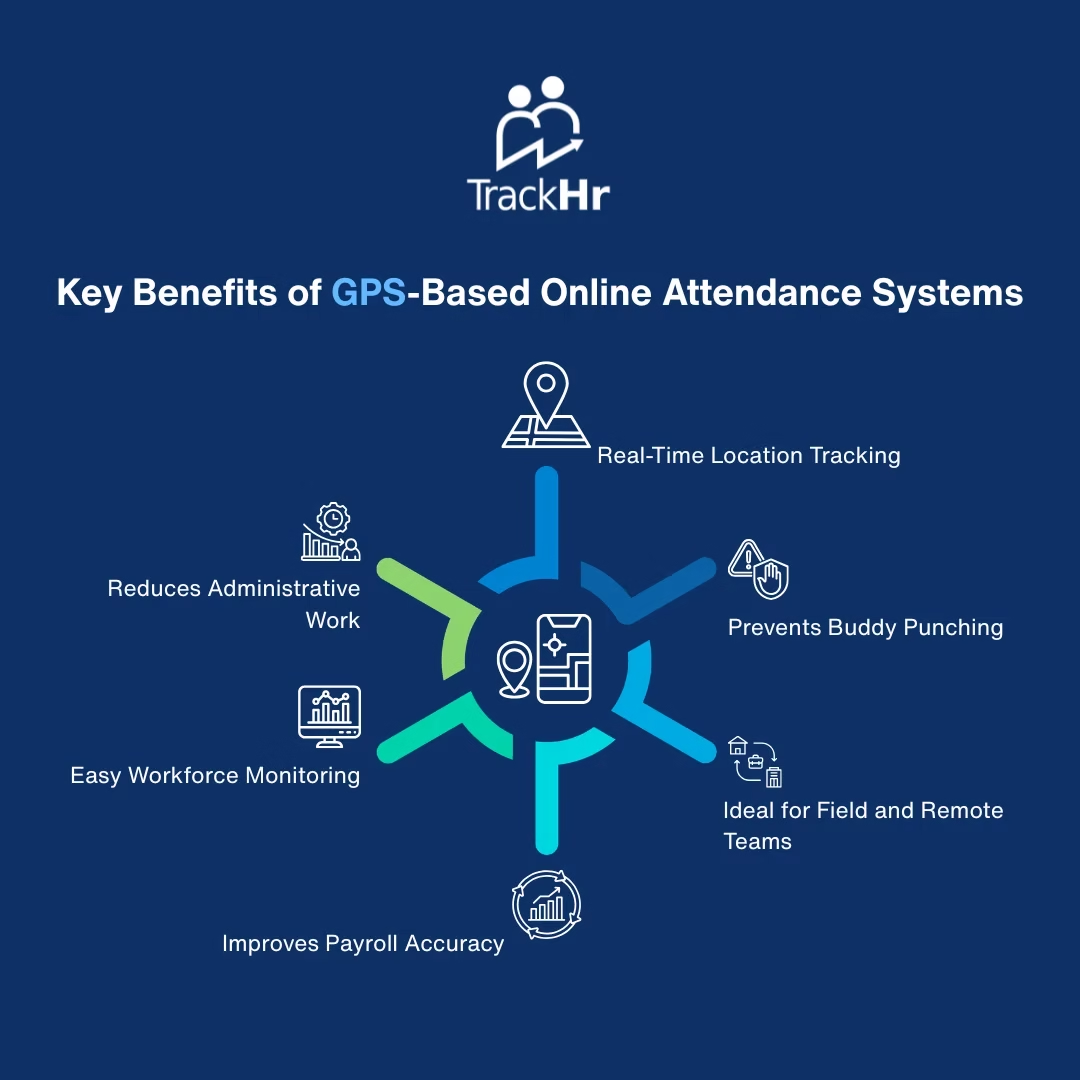
GPS attendance applications follow the position of the employees using their smartphones. They are cloud-enabled, simple to implement, and suitable for employing remote or mobile teams.
Key advantages:
Suitable to work at a distance, in the field, and in a mixed work-from-home environment
No hardware installations are needed.
Geolocation-tagged real-time check-ins
Rapid hooking up to payroll systems
Welcomes geofencing to avoid false check-ins
Biometric Systems: Overview and Benefits
Attendance system: It involves a fingerprint, facial recognition system, or retina scan where the attendance of employees is tracked via physical attendance in a location.
Key benefits:
Identity verification in very high precision
Avoids buddy punching and time fraud
It is applicable in high-security and on-site locations.
Consistent and not linked to mobile devices
Maintains a culture of office attendance discipline
Top Benefits of Using Geolocation Tools for Field Staff
A GPS attendance application is the most feasible option in case you have a decentralized workforce or have a need to take attendance when out of the office or travelling. It is flexible, mobile, and trackable in real time. The employees can record their presence anywhere and at any place that is authorized, and the administrators receive alerts immediately followed by geo-tagged reports. These systems are cost-effective and can be shared within teams.
Conversely, the biometric systems are most suited to applications in businesses that have a centralized office. They are of high security and exclude identity theft based on physical characteristics. They are, however, rather expensive in terms of hardware requirements and time in order to maintain, and they also necessitate physical presence to operate, and hence are not as ideal in a remote-first or hybrid philosophy.
Top Considerations Before Choosing an Attendance System
When making the choice in favour of GPS attendance apps or biometric systems, pay attention to:
Type of workforce: GPS apps work better with remote teams, whereas on-site teams work well with biometric systems.
Price: GPS applications are economical, whereas biometrics require both installation and custom costs.
Security: Biometric systems offer a higher level of control.
Integration: GPS apps tend to work well with contemporary HR, payment, and leave systems.
Flexibility: GPS technologies accommodate freelancers, the labor force, and independent workers.
How TrackHr Combines GPS Accuracy with Ease of Use
The GPS-based attendance tool designed by TrackHr is exclusive to the current hybrid and mobile workforce. It offers:
Geo-tagged check-in/out
Staff/managerial mobile access
Geofencing in order to capture accurate attendance
Time sheet/payroll integration
On-demand attendance reports and analytics
Conclusion
When we compare the GPS attendance app vs biometric systems, the correct option here would be based on your business requirement. There is no better flexibility and scalability of mobile and remote teams than GPS systems. Traditional office solutions are well secured using biometric systems. Working in accordance with the type of workforce and the objective of that operation means getting the proper, efficient, and secure collection of attendance.
Table of Contents
Exhausted from managing performance management manually?