Key Performance Indicators (KPIs) assist organizations in tracking their progress, detecting gaps, and understanding whether crews are on their strategic directions. Nonetheless, manual monitoring of KPIs (via spreadsheets, emails, or disjointed reports) can be quite confusing, inaccurate, and time-consuming.
It is at this point that KPI Management Tools are needed. They consolidate information, automate performance, visualize progress, and give real-time information to make more informed decisions.
This guide will explain the nature of KPI management tools, how they operate, and what key characteristics you should seek to remain aligned, productive, and performance-driven so that your business can operate on the right path.
1. What Are KPI Management Tools?
KPI Management Tools are the platforms that are aimed to assist organizations in:
Define measurable KPIs
Monitor real-time performance.
Show progress through dashboards.
Analyse trends and insights
Align the team work to the goals of the company.
These tools remove the use of manual tracking and make all people aware of what should be accomplished and how the performance is measured.
2. Why Businesses Need KPI Management Tools
With KPI tools, problems encountered are avoided, such as:
Information that is distributed on various platforms.
Delayed reporting
Irregular or erroneous figures.
Lack of performance clarity
Teams and goals are misaligned.
Having an adequate tool will make businesses more transparent, focused, and accountable at all levels.
3. Key Features of Effective KPI Management Tools
a. Customizable Dashboards
Dashboards visualizing KPIs in the form of graphs, charts, and real-time visual indicators assist in quicker understanding of the performance by the teams.
b. Automated Data Collection
It should automatically retrieve data on systems such as CRM, HR, finance, sales software, or analytics systems- minimizing manual errors.
c. Goal Alignment & OKR Support
A good KPI tool supports:
Goal setting
OKRs (Objectives & Key Results)
Team and department cascading goals.
This helps to have the whole organization on track.
d. Alerts & Notifications
Teams are automatically alerted once KPIs are either underperforming or overperforming- enabling managers to take an immediate step.
e. Reporting & Analytics
Detailed reporting aids in the analysis of the trends in performance, result comparisons, and the development of monthly or quarterly performance reports.
f. Role-Based Access
The KPIs that are pertinent to different team members ought to be displayed to them. This provides clarity that is not too complicated for the users.
g. Integration Capabilities
Search tools that are compatible with:
CRM
Project management software.
HR systems
Sales tools
Accounting and ERP systems
Integrations guarantee up-to-date KPI.
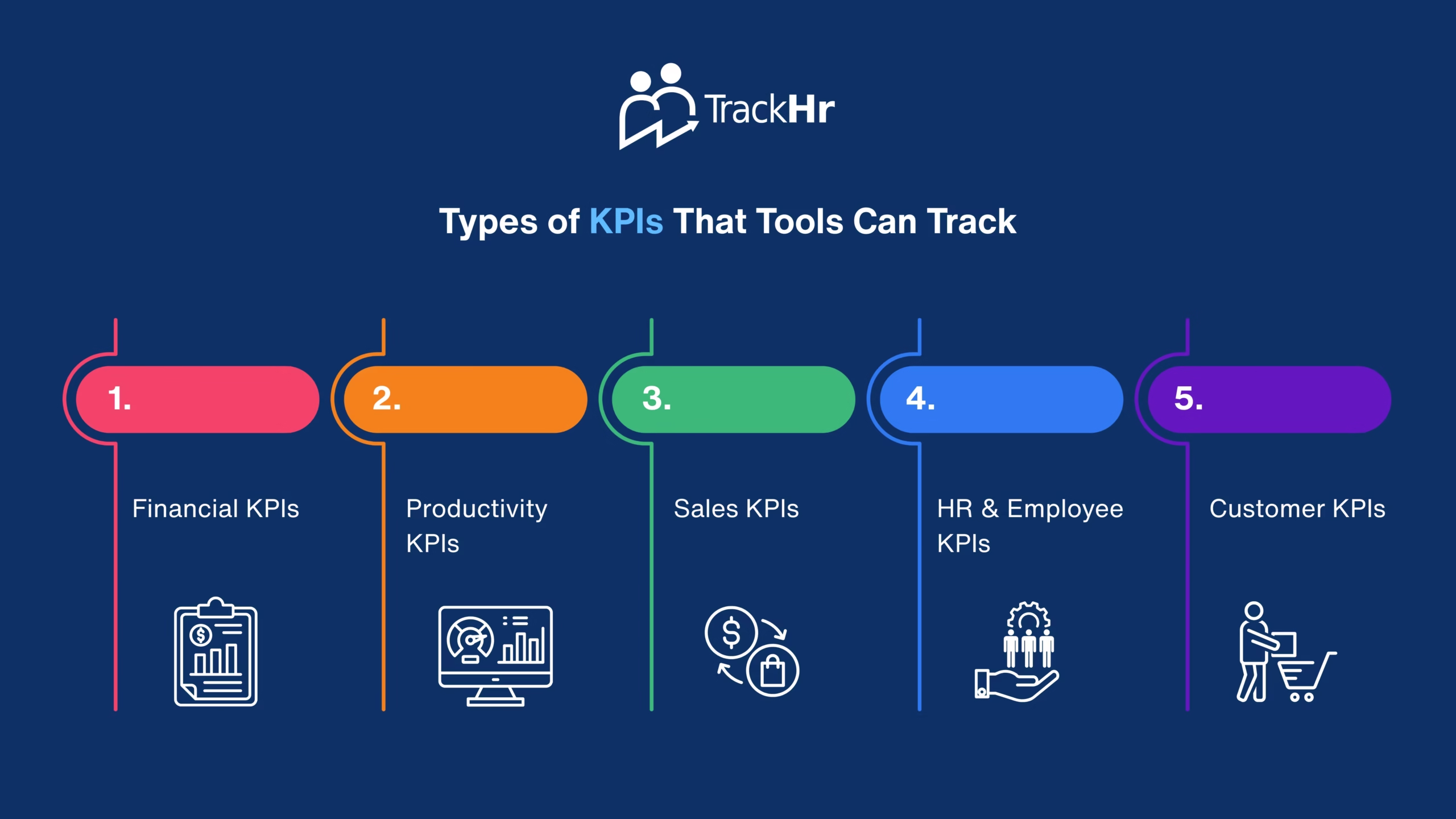
4. Types of KPIs That Tools Can Track
Financial KPIs
Revenue growth
Profit margins
Cash flow
Productivity KPIs
Task completion rate
Project delivery timelines
Sales KPIs
Conversion rate
Lead response time
Monthly quotas
HR & Employee KPIs
Attendance
Attrition rate
Performance scores
Customer KPIs
Customer satisfaction (CSAT)
Net Promoter Score (NPS)
Customer retention rate
An effective KPI management tool is capable of monitoring the measures of various departments under a single roof.
5. Benefits of Using KPI Management Tools
Real-Time Visibility
Real-time information on what is performing and what is not.
Improved Decision Making
Evidence-based decisions result in an improved strategy, planning, and implementation.
Enhanced Accountability
People are aware of their objectives, timeline, and performance levels.
Better Team Alignment
Staff teams remain focused on the goals of the company, which enhances efficiency.
Time Savings
Automated reporting minimizes the possibilities of manual workload and the repetitive nature of work.
6. How to Choose the Right KPI Management Tool
In choosing a tool, take into consideration:
The number of teams and departments.
Type of KPIs you need to track
Integration requirements
Familiarity and user-friendliness.
Scalability and customization.
Budget and long-term ROI
The right KPI tool ought to be in line with your business size, objectives, and workflow.
7. Best Practices for Effective KPI Management
Set SMART KPIs
Specific, Necessary, Achievable, Relevant, and Time-bound.
Keep KPIs Simple
Concentrate on high-impact metrics rather than measuring everything.
Review KPIs Regularly
The weekly or monthly reviews can assist in adjusting the strategies and enhancing the results.
Use Visualized Data
Trends can be interpreted faster using charts and dashboards.
Align KPIs With Business Goals
KPIs must help support the major objectives of your company.
Conclusion
KPI Management Tools are the key to the contemporary business that strives to remain competitive and based. They make it easier to track, improve accuracy, and bring about real-time clarity, which enables teams to operate towards common objectives.
Companies can enhance performance levels, fast-track growth, and make informed decisions through the appropriate choice of a tool and the best practices.
Exhausted from managing performance management manually?