

Blog
How AI Improves Payroll Data Security and Confidentiality
- January 9, 2026
- 8:09 am
The payroll data is one of the most confidential information in an organization that includes the salaries, bank details, tax records, and personal employee information. With cyber threats and data breaches becoming a common occurrence, the conventional payroll systems are, in most cases, inadequate when it comes to safeguarding this information. It is at this point that AI Payroll Data Security is very important.
Through smart algorithms, real-time tracking, and automated regulations, AI enhances the security of payroll without compromising confidentiality and adherence.
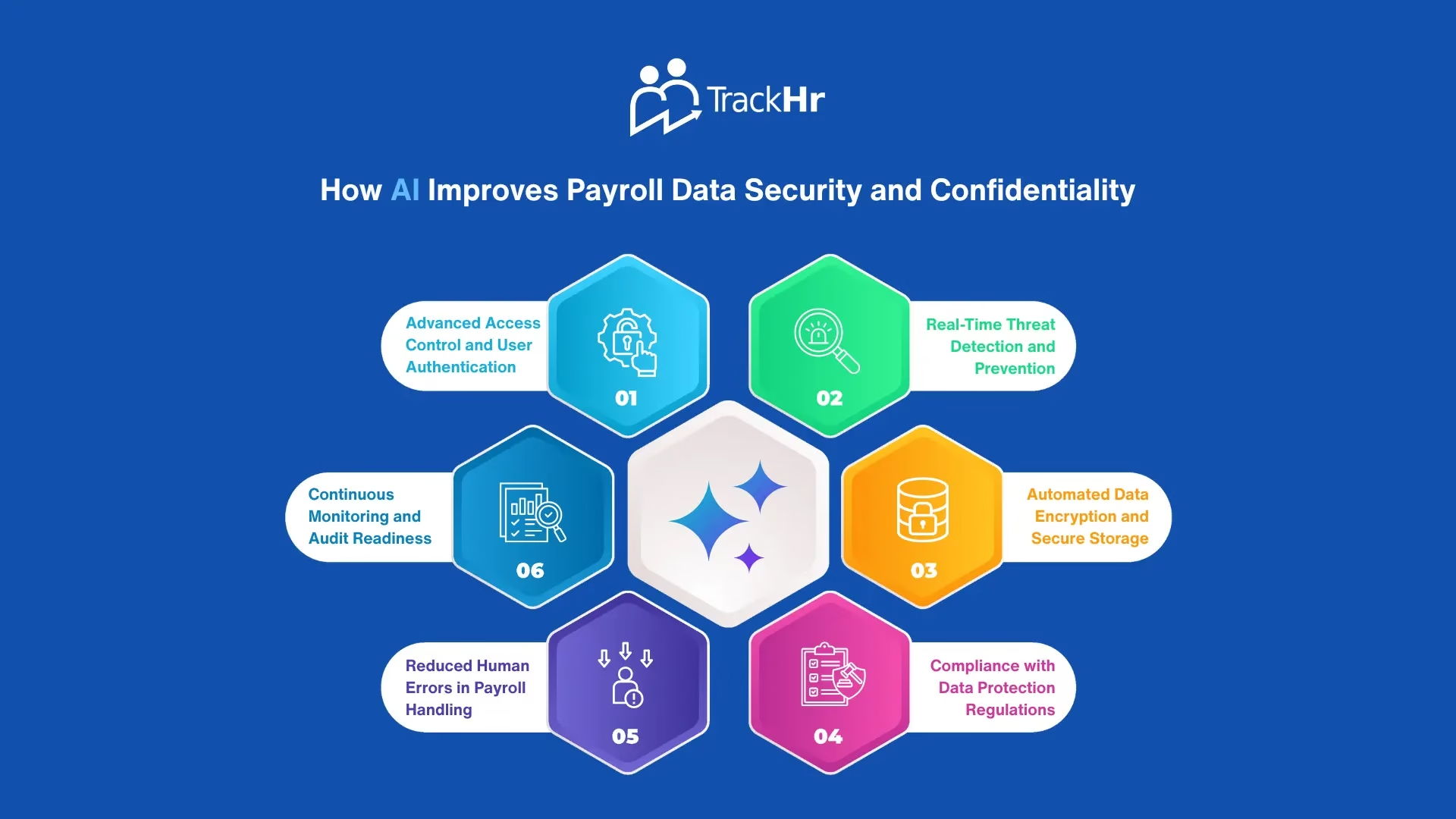
1. Advanced Access Control and User Authentication
A payroll system that is powered by AI applies role-based access and intelligent authentication mechanisms to provide access to sensitive information to only authorized users. AI constantly observes the pattern of logins and notifies suspicious attempts to access the system.
Through AI Payroll Data Security, companies can deny the possibility of unauthorized access and lower the probability of using their internal data.
2. Real-Time Threat Detection and Prevention
In contrast to the old systems, where audits are performed manually, AI constantly analyses payroll data to detect suspicious activity. It identifies abnormalities like abnormal log-in times, abnormal data modifications, or unauthorized downloads.
This is proactive monitoring by AI Payroll Data Security, which assists organizations in avoiding breaches before they become serious.
3. Automated Data Encryption and Secure Storage
The AI-based payroll systems automatically use modern encryption algorithms to secure data during storage and transmission. Payroll information is sensitive and is always encrypted.
With AI Payroll Data security, an enterprise can be confident that even when data is stolen, it cannot be read, and this is secure.
4. Compliance with Data Protection Regulations
The payroll information should be in line with the stringent data protection laws and labor regulations. The AI systems automatically implement compliance regulations and audit trails.
Through AI Payroll Data Security, companies minimize the chances of non-compliance while maintaining the payroll processes to comply with the legal and regulatory requirements.
5. Reduced Human Errors in Payroll Handling
Increased chances of data leakage or mismanagement due to accidental leakage issues are observed in manual payroll processing. AI reduces human interference through automation of payroll calculations, payroll approvals, and payroll validations.
AI Payroll Data Security allows preserving the data confidentiality and accuracy by minimizing the number of procedures on the manual level.
6. Continuous Monitoring and Audit Readiness
Payroll systems powered by AI create real-time security reports and logs, which are fully transparent. These logs assist organizations in reacting promptly to audits or security breaches.
With AI Payroll Data Security, companies remain audit-ready and retain full control of payroll data access and use.
Conclusion
Securing payroll information is no longer a choice, but a business trust and compliance requirement. AI Payroll Data Security offers a robust protection layer, which is a combination of automation, real-time threat detection, encryption, and smart access control.
By implementing AI-based payroll systems, organizations can protect sensitive data and establish trust and resilience in their operations over time, as well as ensure the confidence of their employees.
Exhausted from managing performance management manually?