Blog
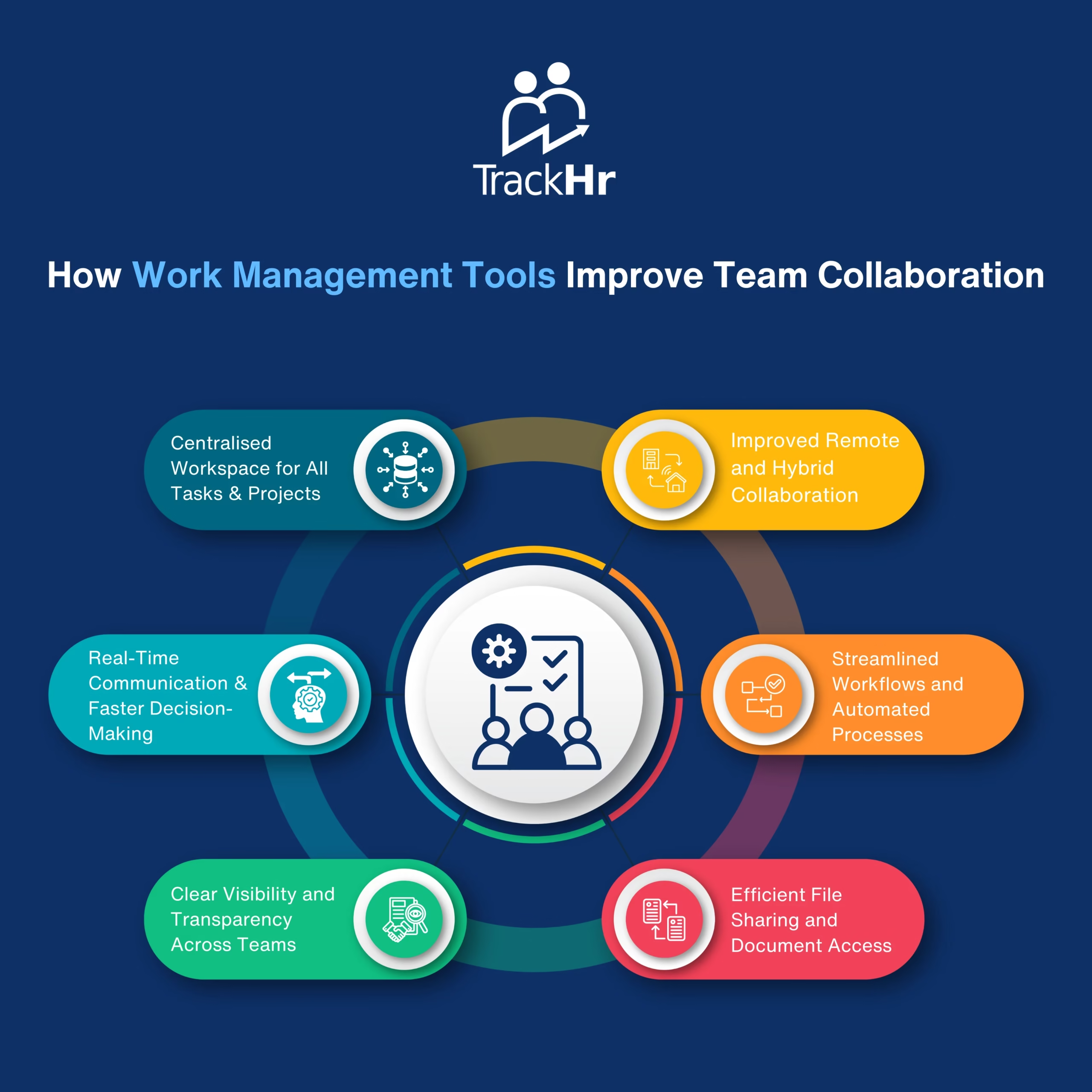
How Work Management Tools Improve Team Collaboration
- December 13, 2025
- 9:13 am
In the current high-paced working environment, smooth collaboration between teams is the key to successfully presenting the projects on time and with high productivity. Nevertheless, the old way of communication and dispersed work processes tends to cause confusion, delay, and lack of coherence. This is where Work Management Tools would be important. Such digital platforms enable teams to work more efficiently and effectively by centralizing tasks and communication as well as tracking their progress.
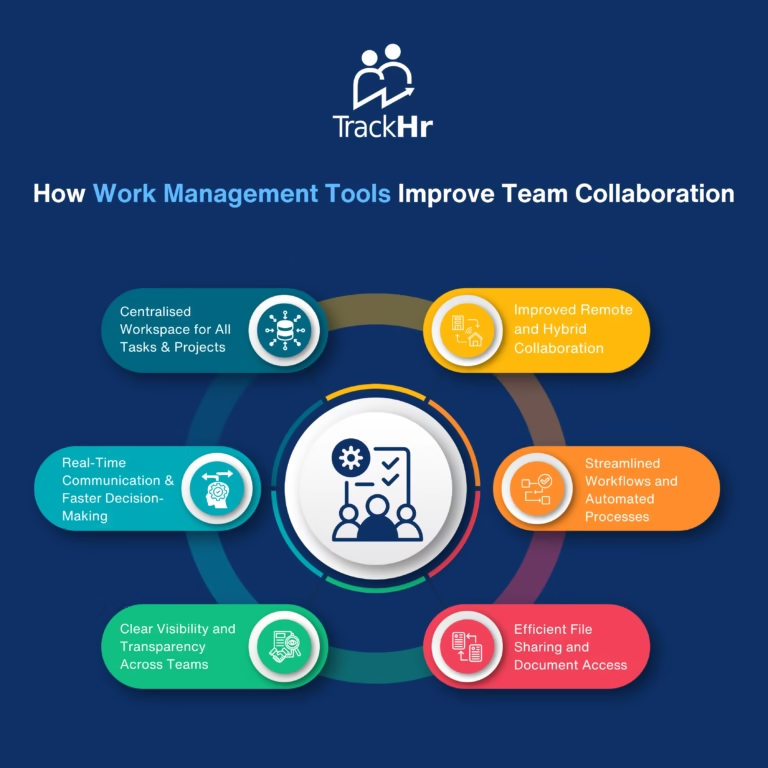
1. Centralized Workspace for All Tasks and Projects
When different teams are using email, spreadsheets, or disconnected platforms, they are likely to lose or miss information.
Work Management Tools address it by making all the tasks, deadlines, and project specifics one.
This is a centralized system where everybody is aware of what they should do, when, and how their work relates to the goals of the team.
2. Real-Time Communication and Faster Decision-Making
One of the greatest impediments to effective teamwork is miscommunication.
It is possible to share the updates, tag people, comment on work directly, and receive instant notifications with the help of the Work Management Tools.
This saves on the time taken to have a lengthy meeting and expedites the decision-making process, keeping everyone on track and moving.
3. Clear Visibility and Transparency Across Teams
Visibility also causes duplication of duties, a lack of deadlines, or even no roles.
Work Management Tools give clear dashboards where who is working on what, progress, and any possible bottlenecks are shown.
This transparency enhances accountability and facilitates smoother work at all levels.
4. Efficient File Sharing and Document Access
The alternative of folders, email attachments, and other storage tools decelerates productivity.
Work Management Tools allow work teams to be able to attach files, share documents, and store project resources in a single digital repository.
All of them have instant access to revised versions, which makes them accurate and consistent.
5. Streamlined Workflows and Automated Processes
The teams waste their time on unnecessary work such as approvals, follow-ups, or status updates.
Modern Work Management Tools mechanize these processes, and thus, the workflows are faster and efficient.
This releases time on the part of the teams to concentrate on innovation, problem-solving, and strategic work.
6. Improved Remote and Hybrid Collaboration
Due to the increasing popularity of remote and hybrid work, communication and productivity cannot be maintained as never been before.
Work Management Tools can fill the gap by providing virtual working environments, time tracking, and built-in communication networks.
Regardless of the geographical locations of team members, they remain related and synchronized.
Conclusion
The Work Management Tools are indispensable in contemporary teams that desire to cooperate more successfully, communicate quickly, and produce finer work. These tools change the nature of organizational interactions as they centralize the information, enhance visibility, allow automation, and support the remote workers. Companies implementing work management systems enjoy increased productivity, reduced error rates as well and more successful projects.
Exhausted from managing performance management manually?