Blog
The Science Behind AI Chatbots in HR Platforms
- January 3, 2026
- 10:33 am
AI chatbots have become a necessary element of the current HR systems. They address the questions of the employees, automate the HR support, as well as improve the effectiveness of communication. However, behind these intelligent conversations, there is an effective blend of data science, machine learning, and language processing. Knowledge of the science behind AI Chatbots in HR Platforms can assist organizations to value the fact that these tools provide precise, quick, and human-like HR feedback.
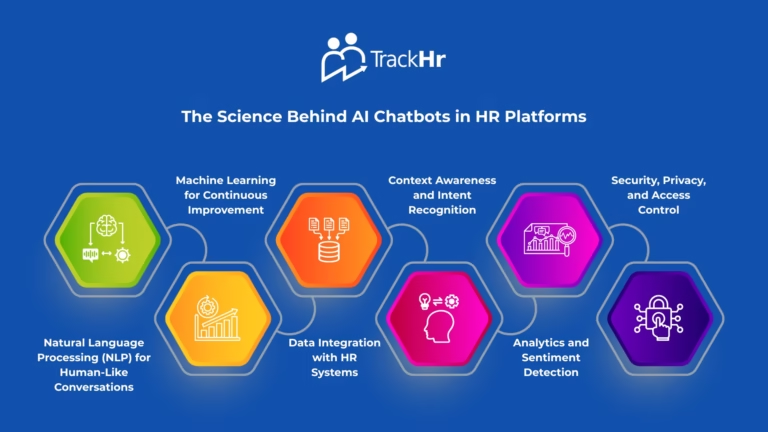
1. Natural Language Processing (NLP) for Human-Like Conversations
The main technology that enables chatbots to interpret and react to human speech is Natural Language Processing. NLP separates employee queries into context, intent, and keywords.
In AI Chatbots in HR Platforms, NLP helps the system to comprehend the questions about attendance, leave, payroll, or policies, even when such questions are worded differently by different employees.
2. Machine Learning for Continuous Improvement
Chatbots can learn through machine learning. Every type of conversation assists the system in becoming more accurate and responsive as time progresses.
Machine learning allows AI Chatbots to be smarter within the HR Platforms by recognizing frequent questions, working out what it would like to hear more and less, and eliminating errors without rewriting the code.
3. Data Integration with HR Systems
Chatbots that are based on AI are not isolated. They are incorporated with the core HR systems that include attendance, payroll, performance management, and employee databases.
This interconnection will guarantee that AI Chatbots within HR Platforms offer real-time, precise, and role-based information and consistency in the data across systems.
4. Context Awareness and Intent Recognition
Modern chatbots respond to context and not keywords. They know when an employee is enquiring about the balance of leaves, whether approved or disapproved, and the policy regulations.
Context awareness allows AI Chatbots in HR Platforms to provide accurate replies and subsequent recommendations, and makes communication even more efficient and user-friendly.
5. Analytics and Sentiment Detection
AI chatbots use the data of the interaction to help determine the trends, questions people ask regularly, and the mood of the employees. Certain systems may even tell when one is frustrated or in a hurry using language patterns.
The AI Chatbots of HR Platforms use analytics to assist HR teams in understanding employee issues and enhancing HR approaches.
6. Security, Privacy, and Access Control
HR data is highly sensitive. Authentication, role-based access, and encrypted data handling are applied by AI chatbots in order to secure information.
Security algorithms can be used in AI Chatbots in HR Platforms to decrease the amount of information employees receive, information that is not relevant to their job, and to comply with and protect data privacy.
Conclusion
Advanced science and intelligent technologies like NLP, machine learning, system integration, and analytics have contributed to the effectiveness of AI Chatbots in HR Platforms. They are not simple automated replies but smart HR assistants, which learn, evolve, and assist employees at any moment.
The emergence of AI chatbots will become even more important as HR platforms keep changing and provide employees with efficient, secure, and personalized experiences.
Exhausted from managing performance management manually?