How to Measure Employee Performance Fairly Using KPIs | TrackHr
Loading ...

Team Work Management & Performance Tracker App

“Awarded Rising Star By

Software Suggest 2024

Blog

How to Measure Employee Performance Fairly Using KPIs

How to Measure Employee Performance Fairly Using KPIs

In the present business world, it is necessary to fairly gauge employee performance to ensure organizational development. Without using a tool for systematic observation or a more objective evaluation, businesses can find themselves with low productivity, employees who are not happy, and poor decision-making.

This is where KPIs (Key Performance Indicators) play an important role. KPIs enable companies to monitor their employees’ productivity, efficacy, attendance, task completion, and general contribution through measurable data.

Smart employee management platforms, such as TrackHr, can help businesses develop clear and equitable performance assessment procedures, which can enhance transparency and accountability and motivate workers.

What Are KPIs in Employee Performance Management?

KPIs (Key Performance Indicators) are measurable targets that assess the effectiveness and success of employees at meeting business objectives and/or goals.

Rather than making guesses, KPIs give you real-time data that you can use to fairly and consistently measure employee performance.

Some examples of employee KPIs are:

  • Attendance percentage
  • Task completion rate
  • Sales targets achieved
  • Response time
  • Customer satisfaction score
  • Project deadlines met
  • Productivity levels
  • Work quality score

KPIs can be used by managers to recognize top performers, to provide assistance to employees who are not performing well, and to enhance team productivity.

Why Fair Performance Measurement Matters

Fair employee evaluations help to build a positive work environment and boost employee trust.

If a player is measured in a way that is unfair to them:

  • Employees feel demotivated
  • Workplace conflicts increase
  • Productivity decreases
  • Employee retention can become challenging.

But a KPI based performance management system provides:

  • Transparency
  • Objective evaluation
  • Better employee engagement
  • Clear performance expectations
  • Improved decision-making
  • Higher accountability

With the help of KPI tracking software, such as TrackHr, businesses can have automated tracking of performance and no favoritism.

Benefits of Measuring Employee Performance Using KPIs

1. Improves Transparency

KPIs establish a clear set of expectations for employees. Target setting is understood by all.

This helps to eliminate confusion and gain trust between staff and management.

2. Increases Productivity

Staff are more productive when they know they are being assessed on the correct indicators.

Motivation to remain focused and productive through real-time tracking of KPIs.

3. Helps Identify Top Performers

It’s easy to identify employees who regularly meet targets in businesses.

This supports:

  • Promotions
  • Incentives
  • Rewards
  • Performance bonuses

4. Detects Performance Gaps Early

KPIs can aid managers in detecting performance problems before they turn into major issues.

This enables timely:

  • Training
  • Coaching
  • Process improvements

5. Supports Data-Driven Decisions

Performance analytics enable managers to make informed decisions rather than assuming.

This allows for better workforce planning and efficiency.

Important KPIs for Employee Performance Measurement

Attendance KPI

Attendance tracking measures:

  • Punctuality
  • Check-in/check-out timing
  • Absenteeism
  • Leave patterns

An Attendance Management System, such as TrackHr, can assist businesses in maintaining correct attendance automatically.

Task Completion KPI

This KPI measures:

  • Number of tasks completed
  • Task completion speed
  • Deadline adherence

Project teams and remote workers can benefit greatly from task-based KPIs.

Productivity KPI

Productivity KPIs are indicators that track the work done over a specific period.

Examples:

Total sales number for the month. Total sales number for the month:

  • Calls handled per day
  • Projects completed
  • Revenue generated

Employee Engagement KPI

Some signs of employee engagement are:

This is particularly helpful for:

  • Participation in meetings
  • Team collaboration
  • Communication quality
  • Feedback response rate

Commitment will make employees more effective and productive.

Quality of Work KPI

This KPI evaluates:

  • Accuracy
  • Error rates
  • Customer satisfaction
  • Work consistency

Customer support, operations, and manufacturing businesses are particularly interested in KPIs that focus on quality.

Best Practices for Fair KPI-Based Performance Measurement

Set Clear and Realistic Goals

KPIs should be:

  • Specific
  • Measurable
  • Achievable
  • Relevant
  • Time-bound

Setting targets that aren’t realistic can have a negative impact on the morale of employees.

Use Data Instead of Personal Opinions

Performance measures should be based on actual evidence and not on favouritism or assumptions.

Real-time analytics using automated tools such as TrackHr gives accurate performance insights.

Track Performance Regularly

Do not assess employees annually.

Continuous monitoring helps:

  • Improve productivity
  • Provide timely feedback
  • Maintain consistency

Provide Constructive Feedback

Regular feedback to employees should be provided on:

  • Strengths
  • Improvement areas
  • Performance expectations

Giving constructive feedback fosters professional development.

Customize KPIs for Different Roles

Each role will have a different set of KPIs.

For example:

  • Sales teams are tasked with revenue goals
  • The HR teams become more involved in employee engagement.
  • Support teams are focused on the response time.

Role-specific KPIs enhance fairness and accuracy.

Common Mistakes Businesses Make While Measuring Performance

Using Too Many KPIs

Having a lot of metrics is confusing and adds pressure.

Keep in mind important KPIs only.

Ignoring Employee Input

Staff need to be aware of and involved in setting KPIs.

This leads to greater acceptance and motivation.

Measuring Only Quantity

The balance to be struck in performance evaluation is between:

  • Quantity
  • Quality
  • Team collaboration
  • Innovation

Lack of Real-Time Monitoring

Manual tracking can lead to inaccuracies in evaluation.

This is where automated employee management software can help.

How TrackHr Helps Measure Employee Performance Fairly

TrackHr provides advanced employee performance management tools that enable businesses to assess employees fairly and accurately.

Key features include:

  • Real-time attendance tracking
  • Task and work management.
  • Employee productivity monitoring
  • Work report management
  • Employee location tracking
  • KPI-based performance analytics
  • Meeting management tools
  • Leave management system

TrackHr helps companies develop an unbiased, fact-based company culture and boost employee accountability and productivity.

Frequently Asked Questions (FAQs)

1. What is an AI-Based Leave Approval System?

KPIs (Key Performance Indicators) are measurable metrics used to evaluate employee productivity, efficiency, attendance, and overall work performance.

2. Why is KPI-based performance measurement important?

KPI-based performance measurement improves transparency, reduces bias, increases accountability, and helps businesses make data-driven decisions.

3. What are examples of employee performance KPIs?

Common employee KPIs include:

  • Attendance rate
  • Task completion rate
  • Sales targets achieved
  • Productivity score
  • Customer satisfaction
  • Response time

4. How does TrackHr help in employee performance management?

TrackHr helps businesses monitor attendance, productivity, tasks, work reports, and employee performance using real-time KPI-based analytics.

Conclusion

To create a productive and motivated workforce, it is crucial to fairly measure employee performance. Evaluation systems based on key performance indicators (KPI) are used to help businesses remove bias, create transparency, and make better decisions in management.

Organizations can boost productivity, praise high-achieving employees, and foster a healthier work environment by leveraging the right metrics and smart workforce management solutions, such as TrackHr.

Investing in KPI-driven performance management is more than just tracking employee performance; it’s about supporting the growth and success of teams.

   Exhausted from managing performance management manually?

Try TrackHr For Free!

Featured Blogs

Section Title

How to Measure Employee Performance Fairly Using KPIs

Learn how to measure employee performance fairly using KPIs. Discover KPI examples, best practices...
AI-Based Leave Approval System for Businesses

Discover how an AI-Based Leave Approval System helps businesses automate leave requests, reduce HR...
Meeting Reminder Systems for Better Productivity

Discover why companies need gate pass management systems in 2026. Learn how they improve security...
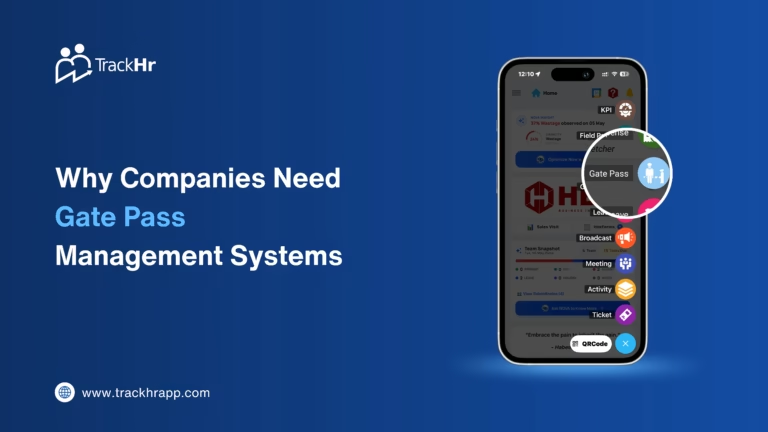
Why Companies Need Gate Pass Management Systems

Discover why companies need gate pass management systems in 2026. Learn how they improve security...
How Work Reports Improve Team Accountability

Discover how work reports improve team accountability, boost productivity, and enhance transparency...
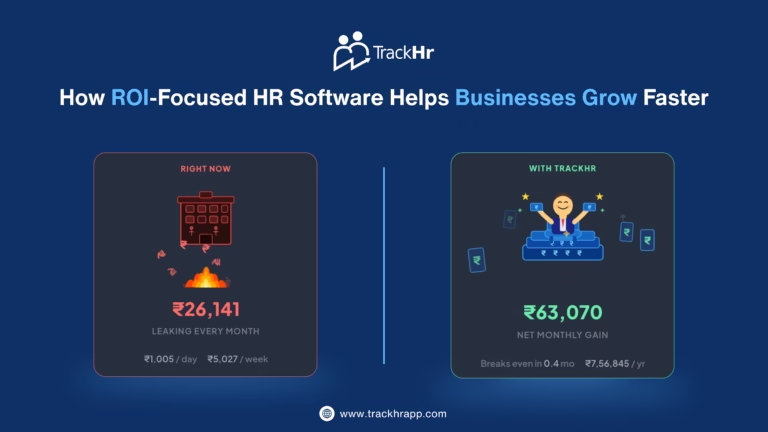
How ROI-Focused HR Software Helps Businesses Grow Faster

Discover how ROI-focused HR software like TrackHr improves productivity, automates HR operations...
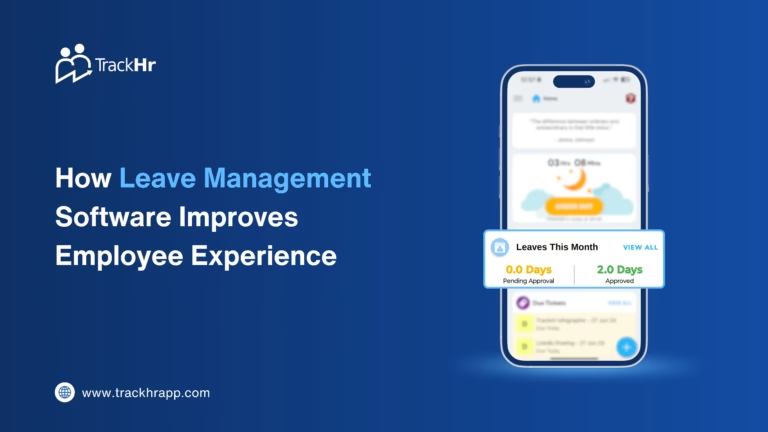
How Leave Management Software Improves Employee Experience and ROI

Discover how leave management software improves employee experience and boosts ROI. Learn how...
Is Your Business Losing ROI Without Smart Work Management Software?

Is your business losing ROI without smart work management software? Discover how automation...
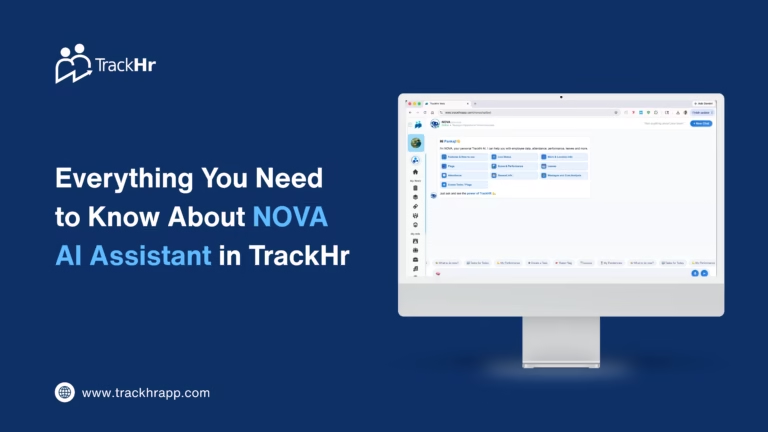
Everything You Need to Know About NOVA AI Assistant in TrackHr

Discover why businesses are switching to AI assistants like NOVA in 2026. Learn how AI improves...
Section Title

Leave a Comment

Your email address will not be published. Required fields are marked *