



Blog
Maximizing ROI with Business Performance Management
- April 17, 2025
- 12:42 pm
In today’s highly competitive business environment, every dollar counts. Companies must ensure that their investments—whether in technology, people, or processes—yield measurable returns. This is where Business Performance Management (BPM) becomes critical. By applying BPM strategies, businesses can track performance, align efforts with goals, and ultimately maximize their return on investment (ROI).
What is ROI in Business Performance Management?
ROI (Return on Investment) measures the efficiency or profitability of an investment. When applied to BPM, ROI reflects the value generated from efforts to monitor, manage, and improve business performance.
ROI = (Net Profit / Investment) x 100
Effective BPM ensures that all resources are used optimally, driving the highest possible return.
Key Elements of BPM That Impact ROI
1. Strategic Goal Alignment
Clear objectives aligned across departments ensure that all resources contribute to core business outcomes.
2. Data-Driven Insights
Real-time analytics and KPIs help managers identify high-impact activities and areas of waste.
3. Process Optimization
Streamlining workflows eliminates inefficiencies and boosts output, directly improving ROI.
4. Employee Performance Tracking
Tools like TrackHr help monitor productivity, attendance, and goal achievement, optimizing human capital.
5. Financial Monitoring
Regular financial reviews linked to performance metrics ensure that budgets are aligned with business goals.
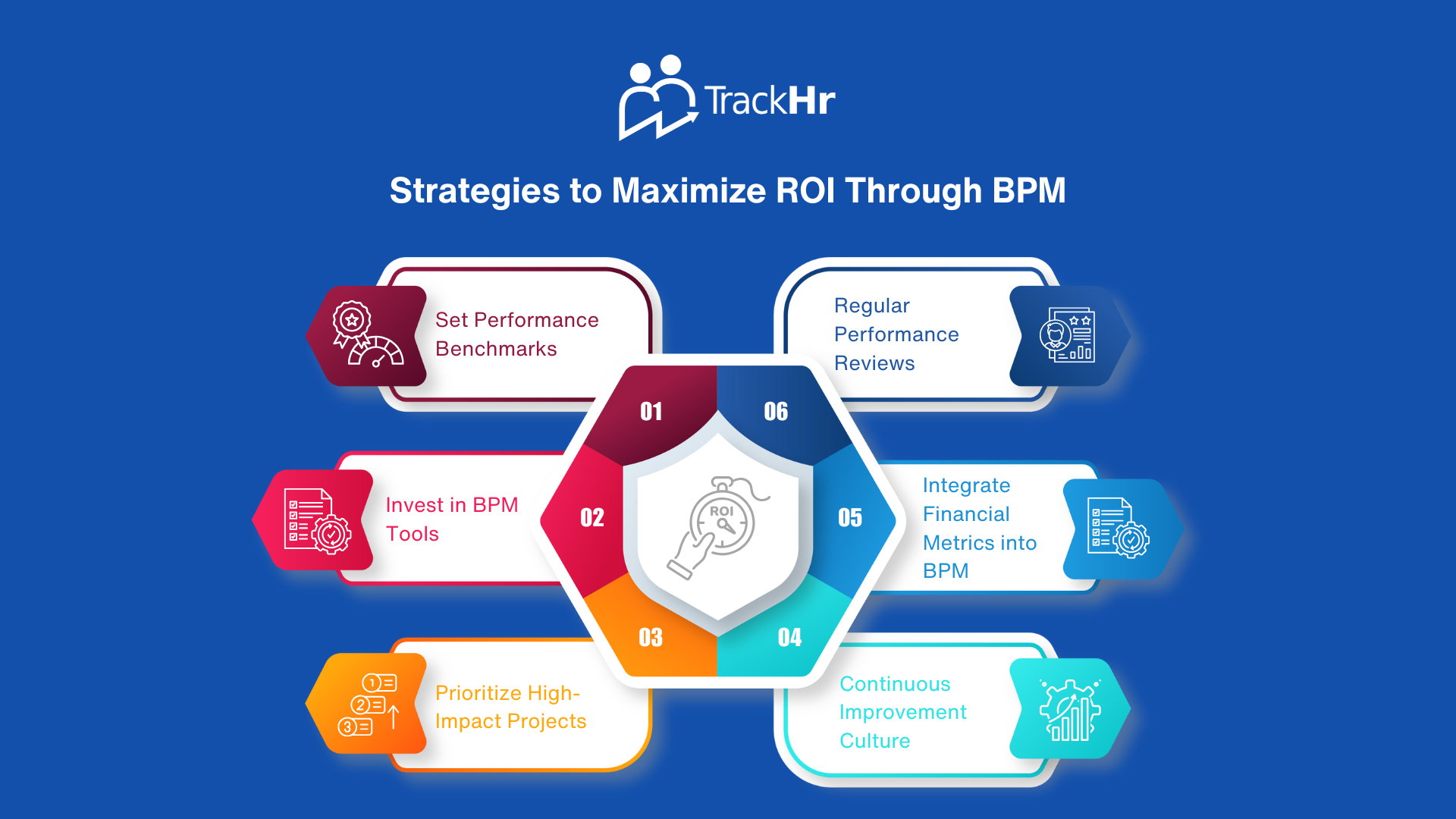
Strategies to Maximize ROI Through BPM
1. Set Performance Benchmarks
Compare current performance with industry standards or past results to identify gaps and opportunities.
2. Invest in BPM Tools
Use automation platforms and dashboards to continuously monitor and evaluate performance. Tools like TrackHr, Tableau, and Power BI make ROI tracking easier.
3. Prioritize High-Impact Projects
Allocate resources to initiatives that promise the highest return. Use data to make informed decisions on where to invest time and capital.
4. Continuous Improvement Culture
Encourage feedback, innovation, and refinement of strategies to adapt to changing market conditions.
5. Integrate Financial Metrics into BPM
Tie operational KPIs (e.g., customer retention, conversion rates) with financial outcomes to better understand ROI drivers.
6. Regular Performance Reviews
Use monthly or quarterly reviews to assess the impact of initiatives and adjust strategy accordingly.
Real-World Example
A tech startup implemented a BPM system using TrackHr to monitor employee productivity and automate reporting. Within three months, they:
- Reduced time spent on manual data entry by 60%
- Identified underperforming processes that were costing them $10,000/month
- Reallocated resources, resulting in a 22% increase in team output
The result: a significant increase in ROI from their operational budget.
Conclusion
Business Performance Management is a powerful framework for driving ROI. By aligning goals, monitoring KPIs, and making data-backed decisions, organizations can extract maximum value from their investments. With the right tools and strategies in place, BPM doesn’t just track performance—it transforms it.
Table of Contents
Exhausted from managing performance management manually?