In the current corporate world that is characterized by high-paced business processes, considering the situation where employee leave is handled manually may cause compliance risks and payroll inaccuracy, in addition to low staff satisfaction. Smart leave management is data-driven and is an intelligent means of managing leave requests, creating records, tracking balances, and ensuring adherence to labour laws and internal company policy.
What Is Data-Driven Leave Management?
Data-driven leave management uses real-time actual attendance, absenteeism, and analytics in planning, authorizing, and tracking employee leaves. This is because it incorporates technology in order to streamline HR processes and make sure that decisions are not made on guesswork, but with facts.
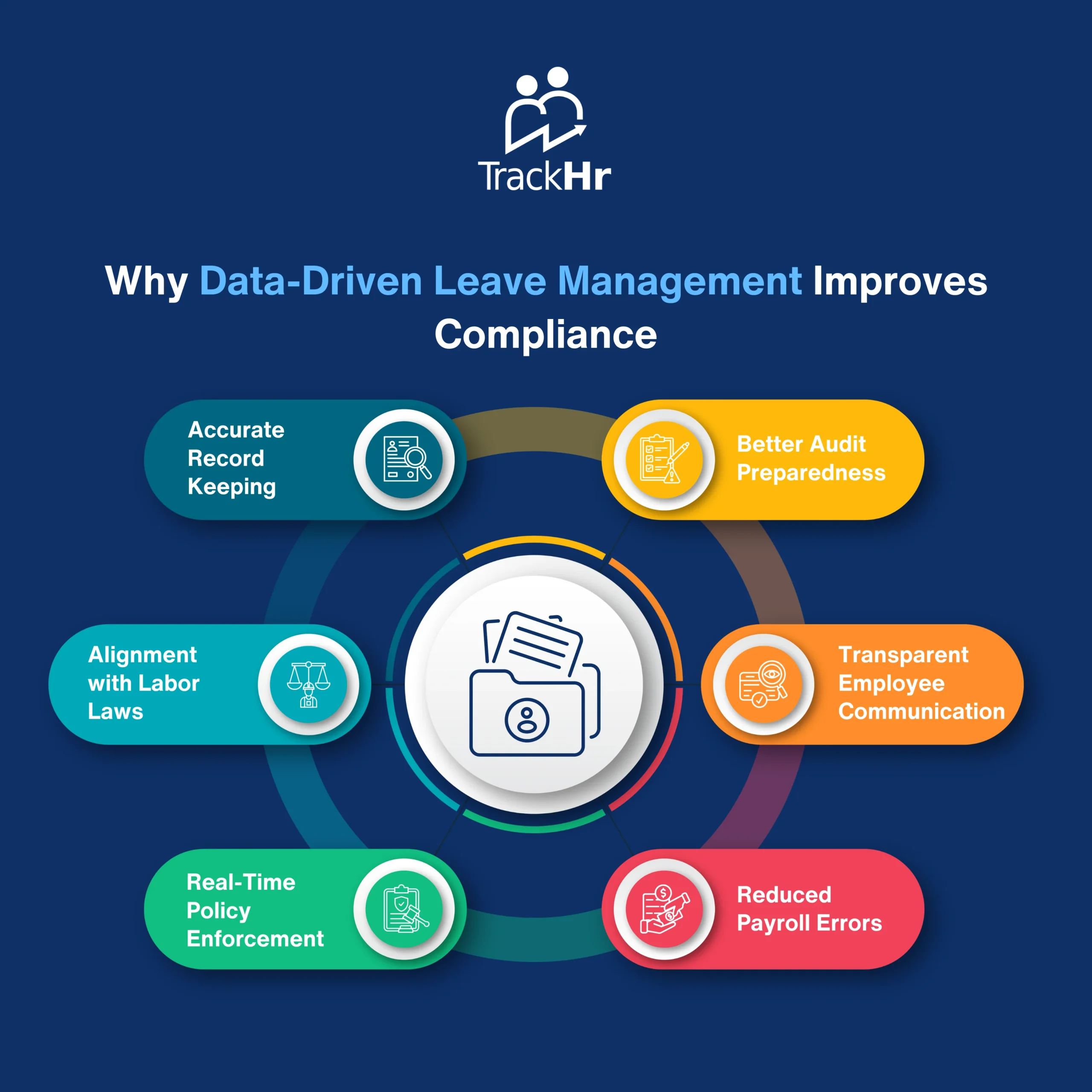
Automated leave systems keep highly detailed descriptions of each request, approval, and adjustment. This keeps you at peace in case of audits or legal inquisitions.
2. Alignment with Labor Laws
Through data-based leave management, the systems will be configured to align with national and regional labor laws and regulations, thereby eliminating the need to manually compute leave.
3. Real-Time Policy Enforcement
To organise time and not get confused with priorities, it is better to group tasks into three or four categories: “Work,” Personal,” or “Urgent.”
4. Reduced Payroll Errors
As there is a syncing of leave data against the payroll, there is no exaggeration or understatement of remuneration or allowances, which would lead to minimal conflicts.
5. Transparent Employee Communication
Employees can simply see their leave balance, history, and policies online in real time, thereby no miscommunication or grievances.
6. Better Audit Preparedness
Centralized data with full details makes it convenient to generate reports on compliance within a short time whenever needed.
Establish Clear Leave Policies and Provide the Employees with Access to them.
Put in place a routine check on the leave data to identify anomalies or trends.
Predict leave trends and staffing with the help of Analytics.
Conclusion
Data-driven leave management can support not only the efficient operations of HR, but it is also important in the context of adherence to labor laws and the policies of companies. Businesses have the opportunity to prevent any legal problems, gain precision, and establish trust in employees by turning to technology and instant insights.
Exhausted from managing performance management manually?