



Blog
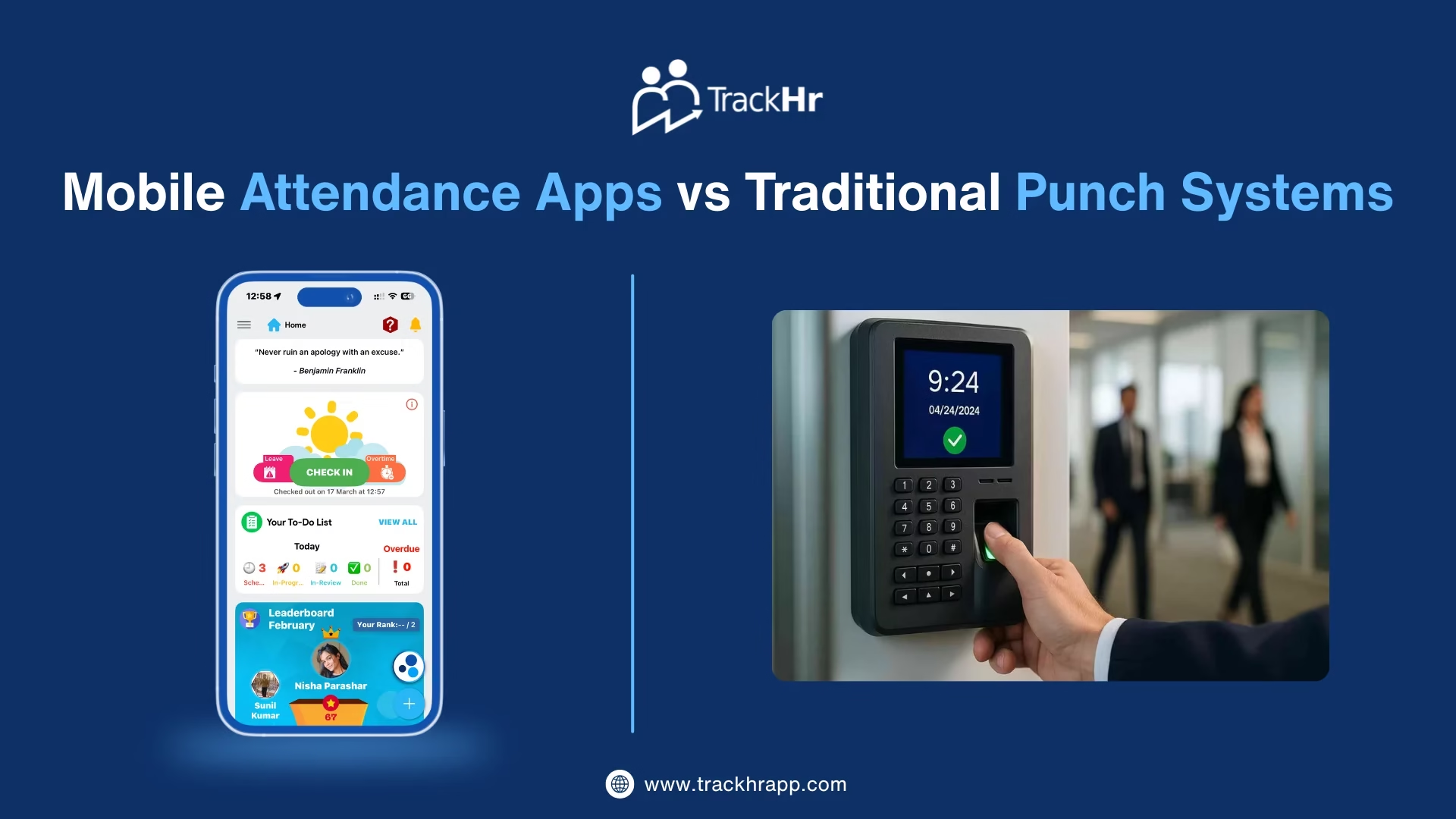
Mobile Attendance Apps vs Traditional Punch Systems in 2026
- March 17, 2026
- 12:27 pm
As businesses evolve in 2026, workforce management is becoming more digital, flexible, and data-driven. One of the biggest transformations is happening in attendance tracking systems.
Organizations are rapidly shifting from traditional punch systems such as biometric machines and punch cards to mobile attendance apps powered by GPS, AI, and cloud technology.
Modern HR platforms like TrackHr are driving this transformation by offering smarter and more scalable attendance solutions.
The key question for businesses today is:
Which is better in 2026 — mobile attendance apps or traditional punch systems?
What Are Traditional Punch Systems?
Traditional punch systems include biometric devices, RFID card systems, and manual attendance registers. These systems require employees to be physically present at a specific location to mark attendance.
Advantages
- Reliable for office-based environments
- Strong physical control over attendance
- Biometric systems help reduce proxy attendance
Limitations
- Fixed location dependency
- High hardware and maintenance costs
- Limited flexibility for remote or field teams
What Are Mobile Attendance Apps?
Mobile attendance apps allow employees to mark attendance using their smartphones. These systems are designed for flexibility and real-time tracking.
Key Features
- GPS-based attendance tracking
- Geo-fencing for location control
- Face recognition or selfie verification
- Cloud-based reporting
- Real-time employee data
Mobile attendance apps are ideal for remote teams, field staff, and businesses with multiple locations.
Key Differences: Mobile Apps vs Punch Systems
1. Flexibility and Accessibility
Traditional Systems
Employees must be physically present at a fixed location.
Mobile Apps
Employees can mark attendance from anywhere, making them ideal for remote and hybrid work environments.
Conclusion
Mobile apps offer far greater flexibility.
2. Cost and Maintenance
Mobile Apps
No hardware investment is required. Maintenance costs are minimal.
Traditional Systems
Require hardware installation, maintenance, and upgrades.
Conclusion
Mobile attendance systems are more cost-effective.
3. Accuracy and Fraud Prevention
Mobile Apps
Use GPS tracking and face verification to ensure authentic attendance.
Traditional Systems
Biometric systems reduce fraud but may still have limitations.
Conclusion
Mobile apps provide more advanced fraud prevention when combined with AI technologies.
4. Real-Time Tracking and Reporting
Mobile Apps
Provide real-time attendance data and analytics.
Traditional Systems
Often involve delayed data processing and limited reporting.
Conclusion
Mobile systems offer better visibility and control.
5. Employee Experience
Mobile Apps
Quick, easy, and user-friendly with no waiting time.
Traditional Systems
May involve queues and device dependency.
Conclusion
Mobile apps provide a better employee experience.
5. Employee Experience
Mobile attendance apps are best suited for:
- Remote teams
- Field workforce
- Startups and SMEs
Traditional systems are suitable for:
- Manufacturing units
- High-security environments
- Fixed-location offices
- Manufacturing units
- High-security environments
- Fixed-location offices
Why Businesses Are Moving to Mobile Attendance
Hybrid work culture, real-time data needs, cost optimization, and improved productivity are key reasons behind the shift toward mobile attendance systems.
Organizations today require flexible solutions that can adapt to changing work environments while maintaining accuracy and control.
When Traditional Systems Still Make Sense
Traditional punch systems remain useful in certain scenarios such as factories, secure facilities, and environments where physical verification is mandatory.
However, many organizations are now adopting hybrid models that combine both approaches.
The Future: Hybrid Attendance Systems
The future of attendance management lies in combining the strengths of both systems.
Hybrid systems integrate:
- Mobile attendance for flexibility
- Biometric verification for security
- Analytics for performance insights
Platforms like TrackHr already support such integrated workforce management solutions.
Frequently Asked Questions (FAQs)
1. What is the difference between mobile attendance apps and punch systems?
Mobile attendance apps allow employees to mark attendance using smartphones, while punch systems require physical presence at a fixed device.
2. Why do companies use performance management software?
Mobile apps offer more flexibility and advanced tracking features, while biometric systems are useful for fixed-location environments.
3. Which system is best for field employees?
Mobile attendance apps are ideal for field employees due to GPS-based tracking and remote accessibility.
4. Do mobile attendance apps reduce costs?
Yes, they eliminate hardware costs and reduce administrative workload.
5. Can companies use both systems together?
Yes, many organizations use a hybrid approach combining mobile apps and biometric systems for better efficiency and security.
Conclusion
In 2026, mobile attendance apps clearly outperform traditional punch systems in flexibility, cost savings, and real-time insights.
While traditional systems still serve specific use cases, the overall trend is moving toward mobile-first solutions.
Businesses that adopt modern tools like TrackHr can improve efficiency, reduce operational costs, and create a more agile workforce.
Exhausted from managing performance management manually?