Blog
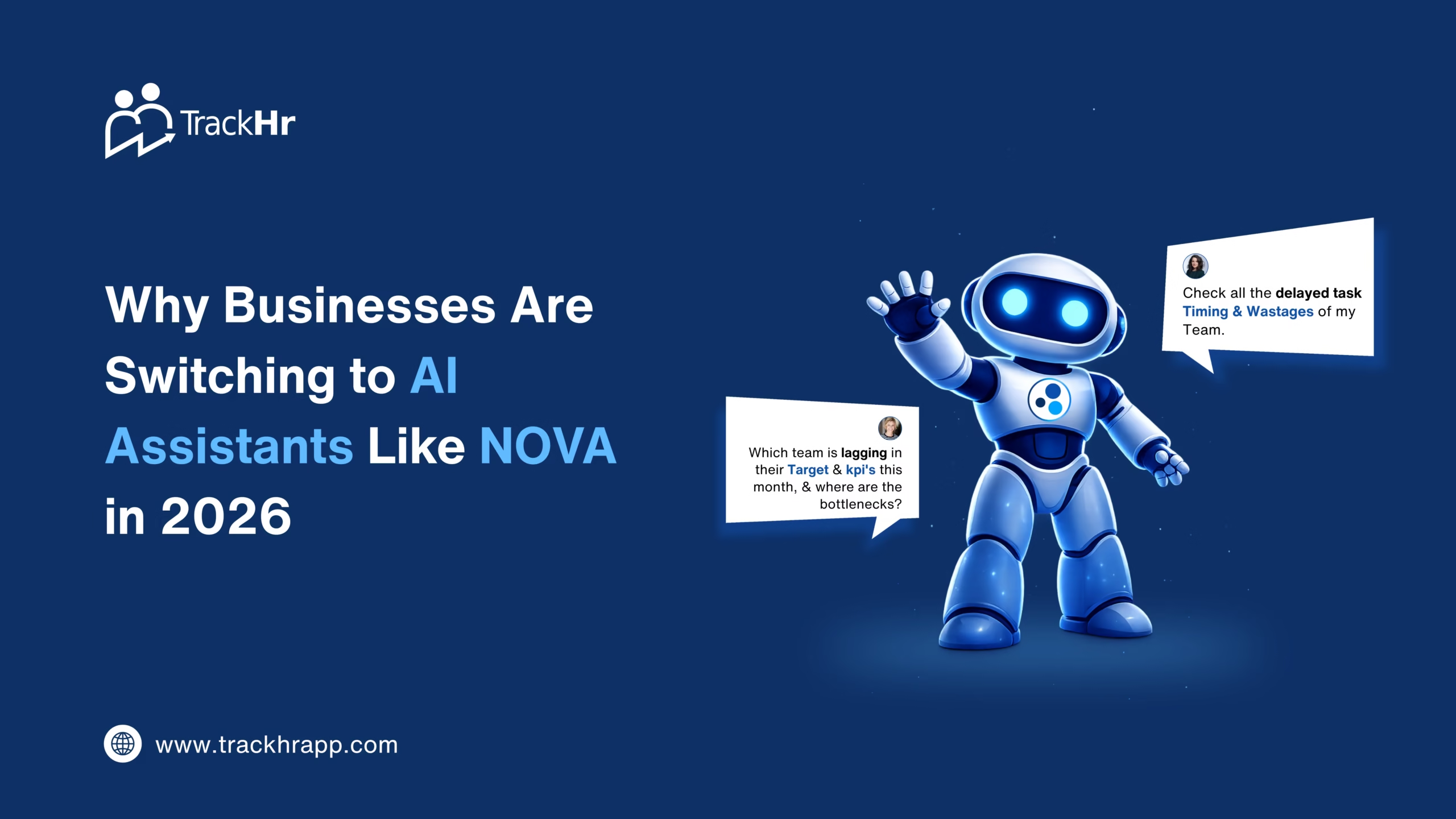
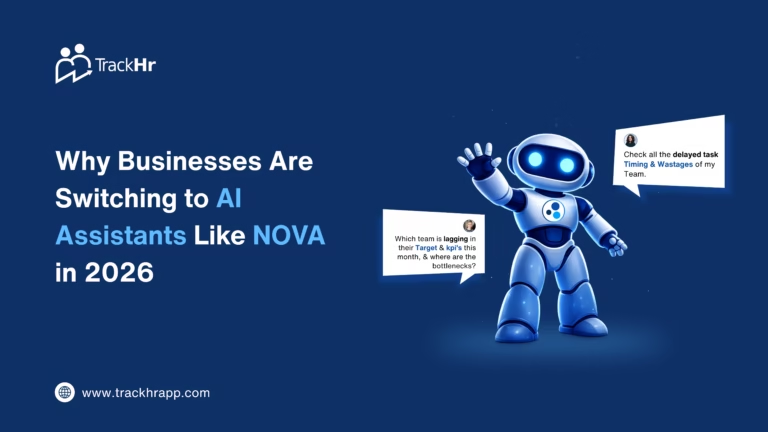
Why Businesses Are Switching to AI Assistants Like NOVA in 2026
- April 18, 2026
- 11:07 am
In 2026, businesses are rapidly adopting AI assistants to stay competitive, improve productivity, and reduce operational costs. What started as simple chatbots has now evolved into intelligent digital assistants capable of handling complex tasks, analyzing data, and even making decisions.
AI assistants like NOVA in TrackHr are becoming an essential part of modern workplaces—helping teams work smarter, faster, and more efficiently.
What Are AI Assistants in Business?
AI assistants are software tools powered by artificial intelligence that can:
- Automate repetitive tasks
- Provide real-time insights
- Manage workflows
- Assist in decision-making
- Interact with users using natural language
In 2026, these assistants are no longer just support tools—they are becoming digital team members that actively contribute to business operations.
Why Businesses Are Rapidly Adopting AI Assistants
1. Massive Productivity Boost
AI assistants significantly improve productivity by automating routine tasks like reporting, scheduling, and data entry.
- Save hours of manual work
- Reduce workload on employees
- Increase efficiency across teams
Organizations using AI in workflows are seeing measurable productivity improvements.
2. Shift from Chatbots to Smart AI Agents
AI assistants have evolved from answering questions to performing actual tasks.
- Updating systems automatically
- Assigning tasks
- Managing workflows
This shift to “agentic AI” means assistants can now take action, not just provide information.
3. Real-Time Decision Making
Modern businesses need instant insights to make quick decisions.
AI assistants help by:
- Analyzing data instantly
- Providing recommendations
- Generating reports in seconds
This reduces delays and improves business agility.
4. 24/7 Availability
Unlike human employees, AI assistants work круглосуточно.
- No downtime
- Instant responses
- Continuous operations
Many businesses report significantly faster response times after adopting AI tools.
5. Cost Optimization
Hiring, training, and managing employees is expensive. AI assistants help reduce costs by:
- Automating repetitive roles
- Reducing administrative overhead
- Minimizing human errors
This allows businesses to scale without increasing workforce costs.
6. Better Data Utilization
Businesses generate massive amounts of data daily—but most of it goes unused.
AI assistants can:
- Analyze large datasets
- Extract useful insights
- Provide actionable recommendations
This turns raw data into valuable business intelligence.
7. Perfect Fit for Remote & Hybrid Work
With remote and hybrid work becoming the norm, AI assistants help manage distributed teams.
- Track performance
- Manage communication
- Provide centralized dashboards
They ensure smooth operations regardless of location.
8. Competitive Advantage
Businesses using AI assistants gain a strong edge over competitors.
- Faster execution
- Better customer experience
- Improved decision-making
Nearly half of small businesses are already using AI for operations and customer interactions.
Why AI Assistants Like NOVA Are Gaining Popularity
AI assistants like NOVA in TrackHr are specifically designed for business workflows, especially HR and workforce management.
What Makes NOVA Different
- Understands natural language commands
- Provides instant HR insights
- Automates attendance and leave management
- Tracks employee performance
- Generates reports instantly
Unlike generic tools, NOVA is deeply integrated into business processes, making it more practical and efficient.
Key Use Cases of AI Assistants in 2026
HR & Workforce Management
- Attendance tracking
- Performance monitoring
- Leave management
Sales & Customer Support
- Lead follow-ups
- Customer query handling
- CRM updates
Sales & Customer Support
- Scheduling
- Reporting
- Workflow automation
AI assistants are now embedded across multiple departments, becoming part of daily operations.
Challenges Businesses Should Consider
When you have observed the following problems, it is time to upgrade:
- Data privacy concerns
- Initial setup and integration effort
- Need for proper training and adoption
Experts emphasize that successful AI adoption requires strategic implementation, not just tools.
The Future of AI Assistants
The future of AI assistants in business includes:
- More autonomous decision-making
- Deeper system integrations
- Multimodal capabilities (text, voice, images)
- Personalized AI experiences
AI assistants are evolving into core business infrastructure, not just optional tools.
Frequently Asked Questions (FAQs)
1. What is employee tracking software?
AI assistants are intelligent software tools that automate tasks, provide insights, and help manage workflows.
2. Why are businesses adopting AI assistants in 2026?
To improve productivity, reduce costs, and make faster, data-driven decisions.
3. How does NOVA AI help businesses?
NOVA helps automate HR tasks, track employee performance, and provide real-time insights.
4. Are AI assistants replacing employees?
No, they are helping employees focus on higher-value tasks by automating routine work.
5. Is AI assistant software suitable for small businesses?
Yes, many affordable AI tools are available for startups and SMEs.
Conclusion
In 2026, businesses are switching to AI assistants like NOVA because they offer speed, efficiency, and intelligence that traditional systems cannot match.
From automating daily tasks to providing real-time insights, AI assistants are transforming how organizations operate.
Solutions like NOVA in TrackHr go a step further by integrating AI directly into HR and workforce management—making them not just helpful tools, but essential business assets.
Exhausted from managing performance management manually?