



Blog
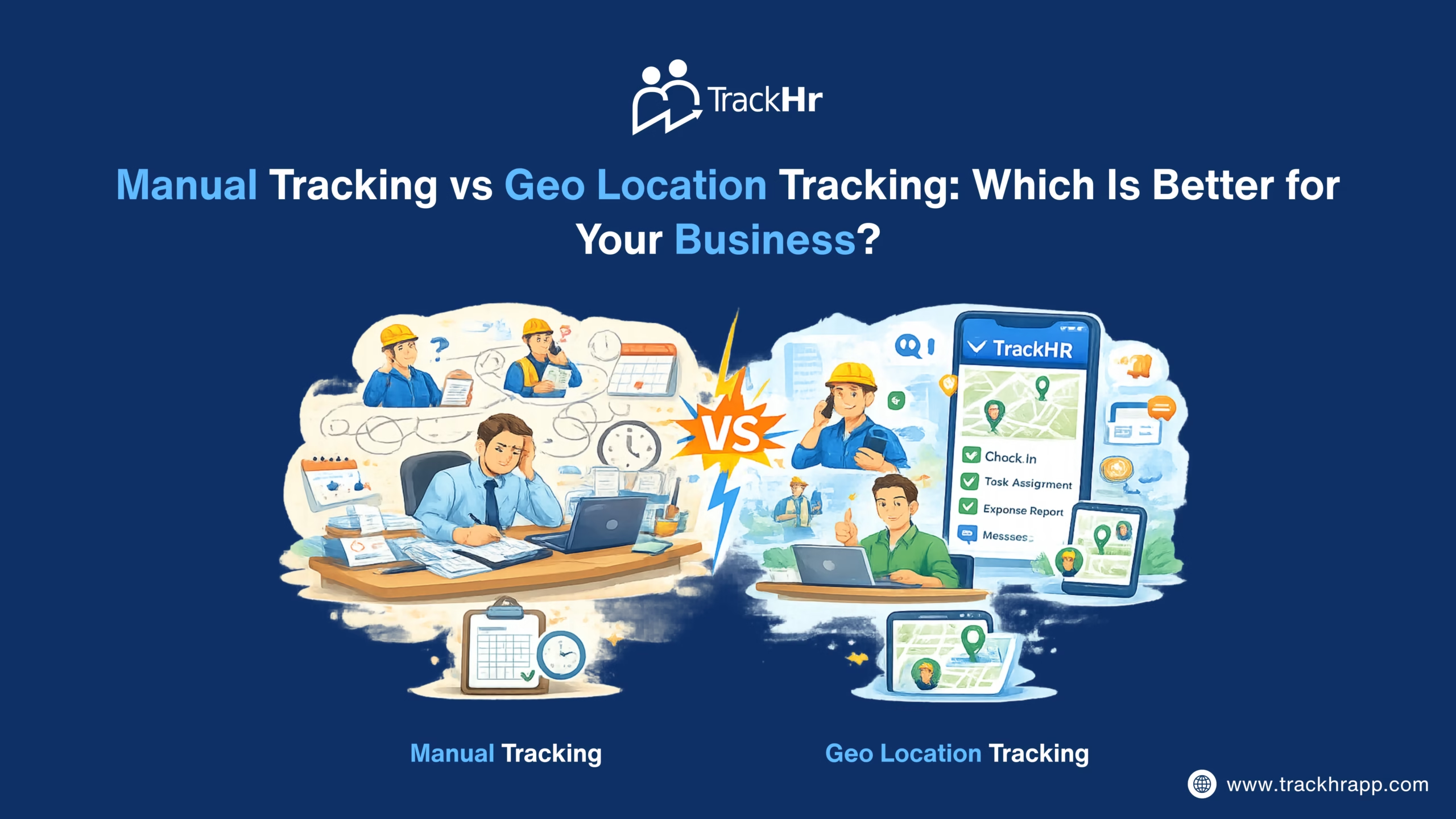
Manual Tracking vs Geo Location Tracking: Which Is Better for Your Business?
- April 13, 2026
- 11:31 am
In the current competitive business world, it is vital to monitor the activity, attendance, and productivity of employees. In the past, companies used a manual tracking system; however, with the development of technology, geo-location tracking systems have taken center stage.
When you find yourself in a dilemma of whether to use manual tracking vs geo location tracking, this guide will assist you in knowing the differences and select the most appropriate one to use in your business.
What is Manual Tracking?
Manual tracking: The attendance, work hours, and activities of employees are recorded with the help of:
- Paper registers
- Excel sheets
- Manual reports
- Physical attendance systems
It is an old technique that is still implemented by certain small businesses.
What is Geo Location Tracking?
Geo-location tracking involves the GPS technology that can be used to track the location, attendance, and movement of employees in real time.
It is typically found in:
- Field sales teams
- Delivery and logistics
- Construction companies
- Service-based businesses
Other modern tools, such as TrackHr, offer geo-location tracking with workforce management capabilities.
Manual Tracking vs Geo Location Tracking: Key Differences
1. Accuracy
Manual Tracking
- High chances of human error
- Possibility of wrong or fraudulent information.
Geo Location Tracking
- Accurate real-time data
- Automated monitoring minimizes errors.
2. Real-Time Visibility
Manual Tracking
- No real-time updates
- Managers are dependent on reports that are delayed.
Geo Location Tracking
- Real-time employee tracking of position and activity.
- As soon as changes happen, the updates can improve the decision-making process.
3. Productivity Monitoring
Manual Tracking
- Hardly quantifiable real productivity.
- Limited performance insights
Geo Location Tracking
- Monitor the movement, accomplishment of tasks, and hours of work.
- Offers comprehensive productivity information.
4. Time and Efficiency
Manual Tracking
- Time-consuming data entry
- Requires manual verification
Geo Location Tracking
- Automation is time-saving.
- More rapid approvals and reporting.
5. Cost Impact
Manual Tracking
- Lower initial cost
- Increased operational cost in the long run through inefficiencies.
Geo Location Tracking
- Initial investment required
- Minimizes the cost of operation in the long run.
6. Security and Accountability
Problem
- Easy to manipulate records
- Limited accountability
Geo Location Tracking
- Secure digital records
- Huge accountability with location evidence.
7. Scalability
Manual Tracking
- Hard to control with expansion.
Geo Location Tracking
- Scales easily to large teams and across locations.
Advantages of Geo-Location Tracking for Businesses
1. Real-Time Monitoring
Follow the employees everywhere and everything they do in real-time.
2. Improved Productivity
Employees remain responsible and committed.
3. Better Decision-Making
Managers receive information-based insights.
4. Reduced Errors
Manual errors are removed by automation.
5. Enhanced Transparency
Accountability and trust are established through clear visibility.
Geo location tracking solutions such as TrackHr assist businesses to work out the geo location tracking with in-built HR features.
When Manual Tracking May Still Be Useful
Manual tracking might be appropriate for:
- Very small businesses that have few employees.
- Organizations that have limited field operations.
- Short-term or temporary tracking requirements.
But with the expansion of businesses, manual systems are usually inefficient.
Why Businesses Are Moving to Geo-Location Tracking
The businesses are moving towards digital solutions in the year 2026 since they:
- Need real-time insights
- Desire to be more efficient.
- Intend to minimize operational expenses.
- Need to have improved workforce control.
Geo-location tracking is an added competitive edge in the management of contemporary teams.
How TrackHr Helps with Geo Location Tracking
It assists companies in coordinating both office and field workers.
- GPS-based attendance
- Real-time employee tracking
- Task and performance monitoring.
- Automated reports
- Mobile app access
It assists companies in coordinating both office and field workers.
Which Is Better for Your Business?
The selection will be based on your size and business requirements:
Choose Manual Tracking If:
- You have a very small team
- Your operations are simple
Choose Geo Location Tracking If:
- You manage field employees
- You must have real-time visibility.
- You desire to enhance productivity and efficiency.
For most modern businesses, geo-location tracking is the better choice due to its accuracy, automation, and scalability.
Frequently Asked Questions (FAQs)
1. What is the difference between manual tracking and geo location tracking?
Manual tracking relies on manual data entry, while geo location tracking uses GPS technology for real-time monitoring.
2. Is geo location tracking accurate?
Yes, it provides highly accurate, real-time data with minimal errors.
3. Why are businesses shifting to GPS tracking?
Because it improves efficiency, transparency, and productivity.
4. Is manual tracking outdated?
It is becoming less effective as businesses adopt digital solutions.
5. Which tool is best for geo location tracking?
Tools like TrackHr offer comprehensive GPS tracking along with workforce management features.
Conclusion
The modern business world is fast-growing out of manual tracking practices. Although they can be utilized in small establishments, they are not accurate, efficient, or scalable.
Geo location tracking, however, offers real-time visibility, increases productivity, and improves decision-making. Applications such as TrackHr enable businesses to embrace new tracking systems and remain competitive.
In case you want to expand and streamline operations, it will be wise to change to geo-location tracking.
Exhausted from managing performance management manually?